Driving in Krabi — Rules, Roads & Safety Guide
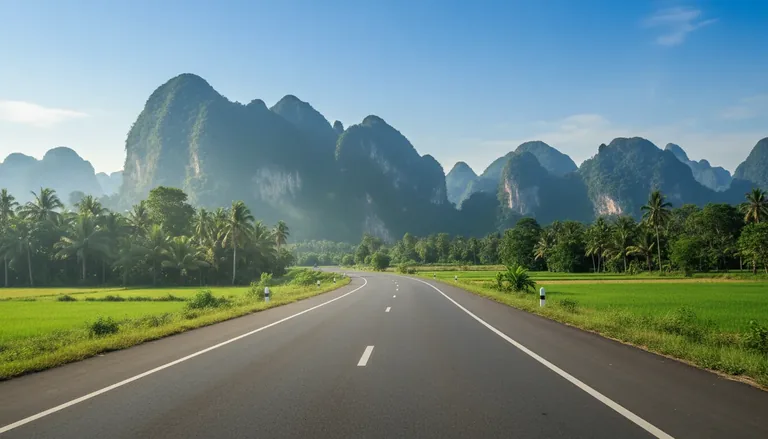
Krabi drives on the left in right-hand-drive cars, but its flat coastal highways are far gentler than Phuket's mountain passes. Master the scooters, monsoon downpours and police checkpoints and the province opens up.
Search & Compare Car Rental Deals
Free cancellation on most vehicles
Adjusting to Left-Hand Traffic
Thailand drives on the left in right-hand-drive cars. For visitors from the United States, continental Europe, Russia or the Gulf this needs a day of conscious effort, while drivers from the UK, Australia, Malaysia and Japan are already at home. Krabi is a forgiving place to adapt because the traffic is light compared with Bangkok or Phuket.
- On Japanese-built cars the indicator stalk is on the right and the wipers on the left — expect to flick the wipers a few times before it sticks.
- Roundabouts run clockwise; give way to traffic already on the circle, coming from your right.
- Wrong-side drift strikes on empty rural roads and when pulling out of resort driveways, not in busy traffic where other cars cue you.
- Scooters undertake on your left constantly, so check the left mirror and blind spot before every turn.
Do your first drive in daylight on the quieter Highway 4034 rather than the busy Ao Nang beach strip. Keep your International Driving Permit, home licence and passport in the car at all times.
Thai Road Rules That Catch Tourists Out
Thailand has tightened enforcement under the updated Land Traffic Act, with higher fines and a points system. Speed limits are 60 km/h in town and 90 km/h on Highway 4; the national 120 km/h ceiling applies only to fully divided expressways, of which Krabi has none. Drink-driving is the trap most likely to ruin a trip: the limit is 0.05 percent, but a stricter 0.02 percent applies to anyone licensed under five years, which in practice means near-zero tolerance for most visitors.
| Offence | Typical Penalty | Notes |
|---|---|---|
| No valid IDP at a checkpoint | 500-1,000 THB | Can void insurance after a crash |
| Drink-driving (first offence) | 5,000-20,000 THB + up to 1 year | Voids all insurance |
| No seatbelt (per person) | Up to 2,000 THB | Front and rear seats |
| Handheld phone while driving | 400-4,000 THB | Hands-free is permitted |
Children under six or below 135 cm must use a child seat, which rental firms can supply if you reserve ahead — local taxis rarely have them. Carry your documents and stay polite at the document checkpoints that appear on Highway 4 and near Ao Nang, especially at night and in high season.

Krabi's Roads and Their Hazards
Highway 4 (Phetkasem Road) is the spine of the province, linking the airport, Krabi Town and the routes north to Phuket and south to Trang. A recent widening project added lanes and two new overpasses at the Old Market and airport junctions to ease the long-standing Krabi Town bottleneck. From Highway 4, Highways 4034 and 4203 branch to Ao Nang and the northern beaches, and Highway 4038 leads inland to the Emerald Pool and hot springs.
Krabi has no equivalent of Phuket's notorious Patong Hill, but the approach roads to Tubkaek and the inland nature sites climb and wind, with gravel shoulders and poor lighting after dark.
- Scooters: dense on the Ao Nang strip and at junctions, weaving and carrying whole families.
- Monsoon downpours: sudden Andaman squalls that flood low streets and slick the roads with oil.
- Unlit rural roads: many inland and northern routes have no street lighting and unlit local bikes.
- Slow pickups, fast night trucks, and stray dogs or monkeys on Highway 4 and rural roads.
Fuel, Stations and Parking
Stations are full-service: an attendant pumps the fuel, so just state the grade and amount. Most petrol rental cars take Gasohol 95 or 91; many newer models also accept the cheaper E20, while SUVs and pickups run on diesel B7 — always check the sticker inside the fuel flap. In mid-2026, Gasohol 95 runs about 43 THB per litre. Note that Esso has left Thailand entirely, with its old stations rebranded as Bangchak, so look for PTT, Bangchak and Shell on Highway 4.
Rentals run a strict full-to-full policy; return the tank brimmed or pay an inflated refuelling fee. Parking follows a curb-colour code — red and white means no stopping, and a wrongly parked car can be clamped with a 500 THB-plus release fee.
Ao Nang's beachfront is tight, with no-parking signs along much of the strip; the free lot by the Ao Nang Landmark Night Market near Nopparat Thara is one of the easier places to leave a car. Krabi Town, the malls and the temple car parks all have free or cheap parking.
Distances and Drive Times From Ao Nang
Ao Nang is the usual base for self-drivers, with most local firms delivering to Ao Nang car rental hotels. The figures below are by road and traffic-dependent, and they show why a car earns its keep for the dispersed inland sights covered in our Krabi attractions by car guide. When your dates are set, compare cars for your trip.
| From Ao Nang To | Distance | Drive Time |
|---|---|---|
| Krabi Town | 18-22 km | 25-30 minutes |
| Krabi Airport (KBV) | 26-28 km | 35-45 minutes |
| Tiger Cave Temple (Wat Tham Sua) | 20-23 km | 30 minutes |
| Emerald Pool / Hot Springs | 65-75 km | 1 hr - 1 hr 15 |
| Klong Muang / Tubkaek | 14-22 km | 20-35 minutes |
| Railay Beach | No road | Longtail boat only |
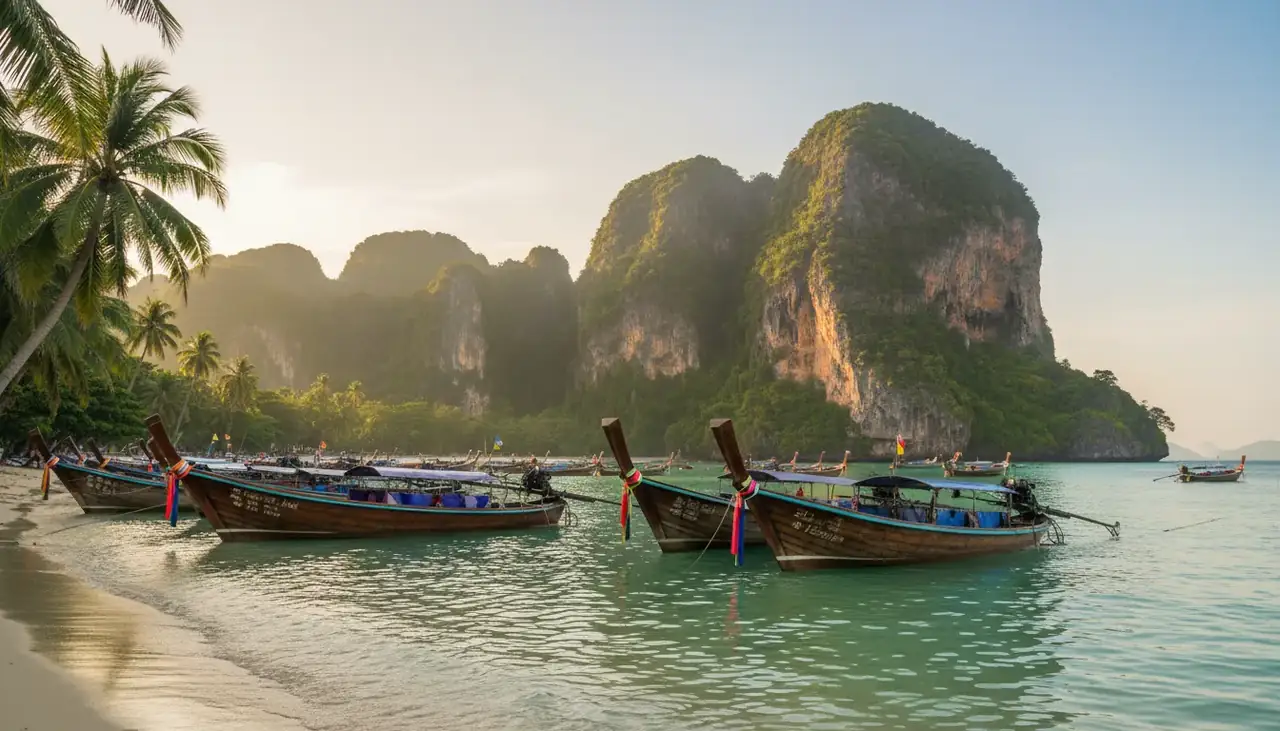
Railay has no road access — it is reached only by longtail from Ao Nang beach or Ao Nam Mao pier, about 100 to 150 THB and 10 to 15 minutes. Park the car and ride the boat for the final stretch.
Seasons, Monsoon and Songkran
The dry high season from November to April brings calm seas and reliable island boats, but also the heaviest tourist traffic and the tightest Ao Nang parking. The green monsoon season from May to October cuts prices, but sudden downpours flood Krabi Town's old-market area, trigger landslide alerts inland after heavy rain, and put red flags on the beaches when surf is dangerous.
The mid-April Songkran festival falls inside Thailand's road-safety campaign known as the seven dangerous days. The 2026 campaign recorded more than 1,200 accidents and 240 deaths nationwide, with speeding the leading cause. Expect water thrown at moving cars, slick roads and more impaired drivers — keep long-distance driving to a minimum that week.
Save the key numbers: 191 police, 1155 Tourist Police with English-speaking operators, 1193 highway police, and 1669 or 1554 for medical help. After any crash, switch on hazards and do not move the car until the insurer's surveyor or police arrive.
Frequently Asked Questions
Is it safe to drive in Krabi?
Which side of the road does Thailand drive on?
What is the speed limit in Krabi?
Do police checkpoints really check tourists?
What should I do after an accident?
Ready to compare car rental deals in Krabi?
Check live prices and availability from local and international suppliers.
Compare car rental deals